Akartha

Edit Content

Why Branding Is a Business Investment (Not a Marketing Expense) in 2026

author

Aditi Kakaria

Date

19 Jan 2026

category

Marketing & Advertising

For founders and business leaders, branding is still often treated as a marketing line item, something discretionary, aesthetic, or secondary to growth.
In 2026, that mindset is no longer just outdated. It is actively damaging businesses.

For years, branding was understood as storytelling for humans logos, campaigns, emotional narratives. While that foundation still matters, the environment brands operate in has fundamentally changed.

Today, brands are evaluated long before a human engages with them.

They are filtered through algorithms, interpreted by AI systems, surfaced by recommendation engines, assessed in investor decks, and judged by talent scanning for credibility. By the time a customer, employee, or investor encounters your brand, a decision has already begun forming.

This shift changes everything.

Branding is no longer a cost centre within marketing.
It is a business system that influences pricing power, growth efficiency, resilience, talent quality, and valuation.

At Akartha, we believe that if you aren’t treating your brand as an asset, you aren’t building a business; you’re just selling a commodity. Here is why branding is the smartest investment on your balance sheet.

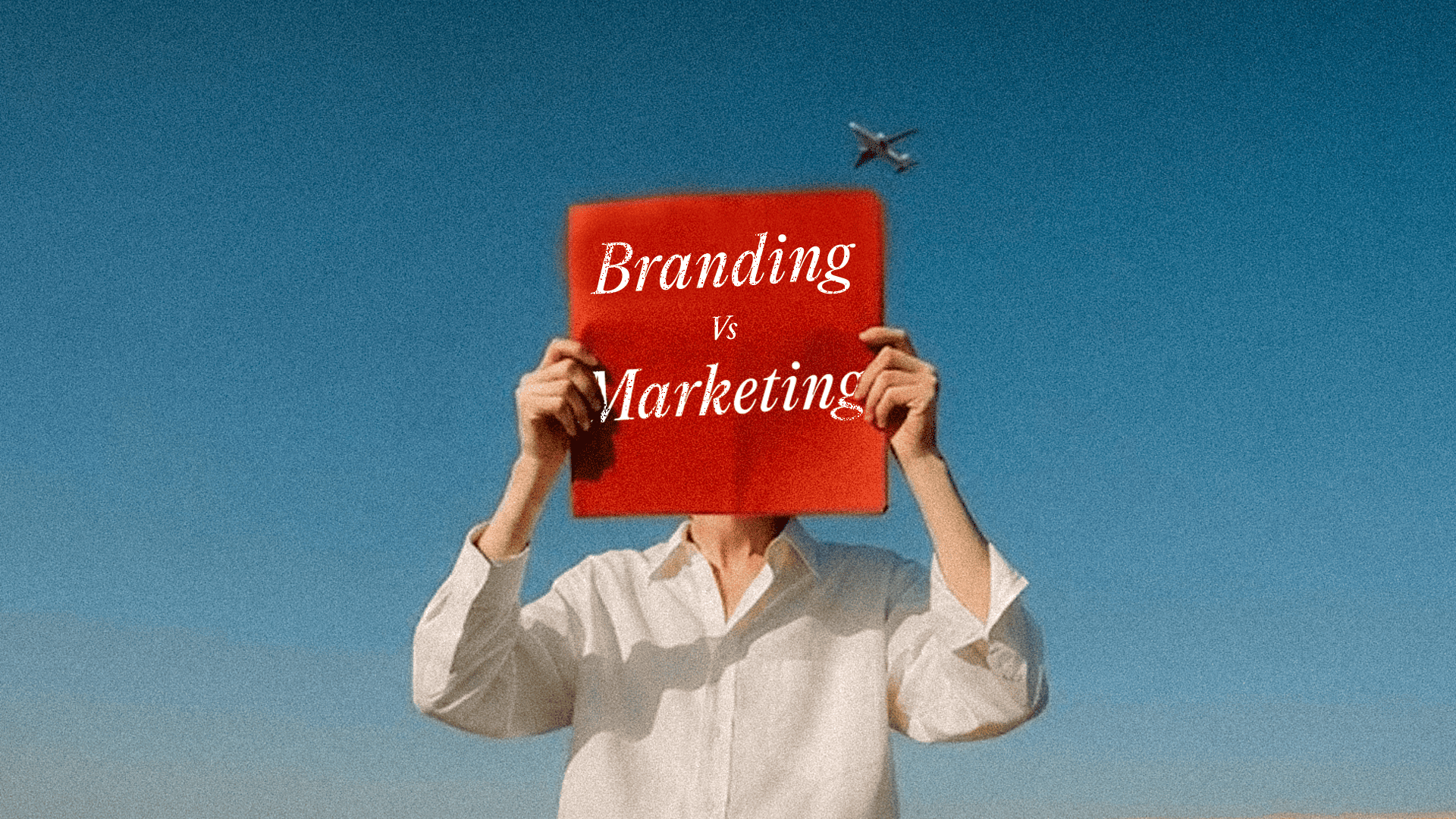
Branding vs Marketing: The Structural Difference

Marketing operates in the short term.
It answers “Why now?” driving traffic, leads, and conversions.

Branding operates in the long term.
It answers “Why this business?” building meaning, trust, and preference that compound over time.

In 2026, this distinction is no longer philosophical. It is financial.

When branding is treated as an expense, marketing becomes louder, shorter-lived, and more expensive.
When branding is treated as an investment, marketing becomes more efficient, scalable, and defensible.

This is the real branding vs marketing divide and it shows up directly in business outcomes.

1. Branding Creates Pricing Power in a Transparent Market

Customers today can compare products, features, and prices instantly. In such an environment, businesses without strong brands are pushed into price competition by default.

Brands change that equation.

A strong brand:

  • Reduces perceived risk in decision-making
  • Signals consistency and reliability
  • Justifies premium pricing without constant discounting

This is why two functionally similar products command vastly different prices. Customers aren’t paying for features they’re paying for certainty.

In India today, even differentiation lasts only one funding round. What doesn’t disappear is perception.

Pricing power is not a marketing outcome.
It is a branding outcome.

2. Branding Lowers Customer Acquisition Cost (CAC)

In 2026, performance marketing is more crowded and more expensive than ever. Rising CPMs, fragmented attention, and declining trust mean businesses must spend more just to stay visible.

Branding directly offsets this cost.

A strong brand:

  • Improves ad recognition and recall
  • Shortens sales cycles
  • Increases organic demand and referrals

Industry data consistently shows that brands with high awareness and clarity experience 20–40% lower CAC over time. Not because they advertise less, but because trust does part of the selling before the ad, the landing page, or the sales call begins.

We’ve seen brands with smaller budgets outperform larger competitors simply because they were clearer, not louder.

Branding turns growth from rented attention into owned demand.

3. Branding Is the Only Durable Competitive Moat  (Middle-Out-And-There)

Products can be copied.
Technology evolves.
Pricing advantages disappear.

What remains defensible is brand meaning.

In volatile markets, customers don’t stay with the cheapest option. They stay with the brand they trust. Branding creates emotional loyalty that logic, features, and discounts cannot easily override.

This makes branding a form of business insurance:

  • It stabilises demand during uncertainty
  • It protects against commoditisation
  • It sustains relevance when markets shift

Branding is often the first line item founders want to cut when growth slows. Ironically, that’s when it matters most.

In 2026, resilience is as valuable as growth.

4. Branding Attracts Talent and Aligns Culture

Branding no longer speaks only to customers. It speaks to employees, partners, and future leadership.

Top talent increasingly chooses companies based on:

  • Clear vision
  • Strong culture
  • Credible long-term direction

A well defined brand reduces hiring friction, improves retention, and aligns teams faster. This has a direct impact on productivity and operating costs.

Culture isn’t built internally and communicated externally.
It’s built through branding consistently, everywhere.

5. Branding Increases Business Valuation

From an investor’s perspective, branding is a multiplier.

Businesses with strong brand equity:

  • Command higher valuation multiples
  • Signal future growth potential
  • Reduce perceived market risk

This is why brand value often appears as goodwill on balance sheets and why it can outweigh physical or operational assets during acquisitions.

A generic business is valued on current cash flow.
A branded business is valued on future relevance.

When branding is weak, growth must be bought.
When branding is strong, growth is negotiated.

Is Branding Really Measurable?

Yes but not through impressions or reach alone.

The real impact of branding shows up in:

  • Customer acquisition cost
  • Pricing tolerance
  • Sales velocity
  • Talent quality and retention
  • Valuation multiples

Branding is measured in efficiency, not applause.

Is Branding Really Measurable?

Branding today is not a design task or a campaign initiative. It is a strategic leadership decision that affects how a business grows, hires, competes, and survives.

The real question is no longer:
“How much does branding cost?”

It is:
“What is the cost of being interchangeable?”

The Akartha Perspective

At Akartha, we don’t approach branding as surface level expression. We approach it as business architecture designed to scale value, reduce risk, and compound trust over time.

This is the lens we apply while building brands across categories and stages of growth.

Because in 2026, branding isn’t about being seen.
It’s about being chosen consistently.

Branding is not a marketing expense.
It is a business investment.

Our Activities
Why Branding Is a Business Investment (Not a Marketing Expense) in 2026

Why Branding Is a Business Investment (Not a Marketing Expense) in 2026

Akartha crafts adaptive, hyper-local branding for AgriCentral.

Beyond Influence: The Future of the Creator Economy

Beyond Influence: The Future of the Creator Economy

Beyond Influence: The Future of the Creator Economy author Shravya Date 19 Jul 2025 category Marketing & Advertising Not just…

Building Brands That Belong: The Power of Culture-First Marketing

Building Brands That Belong: The Power of Culture-First Marketing

Building Brands That Belong: The Power of Culture-First Marketing author Shravya Date 19 Jul 2025 category Marketing & Advertising Not…

Inside Akartha: How We Blend Art, Strategy, and Chaos into Culture-Shifting Work

Inside Akartha: How We Blend Art, Strategy, and Chaos into Culture-Shifting Work

Inside Akartha: How We Blend Art, Strategy, and Chaos into Culture-Shifting Work? author Shravya Date 19 Jul 2025 category Marketing…

From Insight to Impact: How to Build Culturally Rooted Campaigns.

From Insight to Impact: How to Build Culturally Rooted Campaigns.

From Insight to Impact: How to Build Culturally Rooted Campaigns? author Shravya Date 19 Jul 2025 category Marketing & Advertising…

What Makes a Campaign Work in India (And What Doesn’t)?

What Makes a Campaign Work in India (And What Doesn’t)?

What Makes a Campaign Work in India (And What Doesn’t)? author Shravya Date 19 Jul 2025 category Marketing & Advertising…

How We Scaled AgriCentral’s Farmer-Centric Brand

The Rural Brand Playbook: What We Did with AgriCentral author Shravya Date 19 Jul 2025 category Agri-Tech At Akartha, we…

Inside a creative design Studio

Design Studio Inside a creative design Studio author Santhosh Date 19 Sep 2024 category Activity We are seekers and storytellers…

Feel home? write to us
info@akartha.com
(Shravani)

Shravani

Head of Performance Marketing

Scaling brands through data-driven digital performance.
Worked with brands like: Pocket FM, Blackbuck and many more.

(Dayasheelan B R)

Dayasheelan B R

Head of Growth

Growth-focused Product Marketing & Management Leader. Skilled in strategy, agile growth, automation, and customer engagement for business expansion. Specializes in lead generation and sales enablement

(Nirmal)

Nirmal

Video Editor

Young, driven, and highly dedicated, Nirmal is a passionate video editor with an infectious work ethic. His energy, consistency, and attention to detail help turn creative ideas into polished, high-quality visual narratives.

(Nirmal)

Nirmal

Video Editor

Young, driven, and highly dedicated, Nirmal is a passionate video editor with an infectious work ethic. His energy, consistency, and attention to detail help turn creative ideas into polished, high-quality visual narratives.

(Ranga Shayi)

Ranga Shayi

Social Media Manager

​Ranga Shayi brings a unique blend of MBA strategy and creative intuition to the team. With a background in Marketing & Analytics and sharp insights from the high-speed quick commerce industry, he knows how to spot a trend before it peaks. But what truly sets Ranga apart is his mindset in the volatile world of social media: He doesn’t believe in losing. In his playbook, you either win, or you learn something valuable for the next campaign. He’s here to ensure the agency does a lot of both.

(Aditi Kakaria)

Aditi Kakaria

Social Media Manager

Aditi Kakaria is a Social Media Manager at Akartha, contributing to the brand’s digital storytelling through creative ideation for ad shoots and Instagram Reels. Aditi collaborates with the creative team to develop engaging, trend led content that strengthens Akartha’s social media presence and connects meaningfully with audiences.

(Shreya G)

Shreya G

Associate Manager

Shreya is an Associate Manager at Akartha, contributing through research led thinking and content creation while supporting key initiatives across the agency.

(Kishore Upadhya)

Kishore

Executive Manager

Kishore is the Executive Manager at Akartha, overseeing the smooth operation of the agency and ensuring everything runs efficiently behind the scenes. With a keen eye for detail and excellent organizational skills, Kishore manages day-to-day operations, coordinating teams, and streamlining processes to keep projects on track. His ability to juggle multiple tasks while maintaining a high standard of work makes him an invaluable part of Akartha. Outside of his role, Kishore is always looking for ways to optimize workflows and improve operational efficiency, contributing to the agency’s growth and success.